4″ Riprap
4″ nominal angular rock
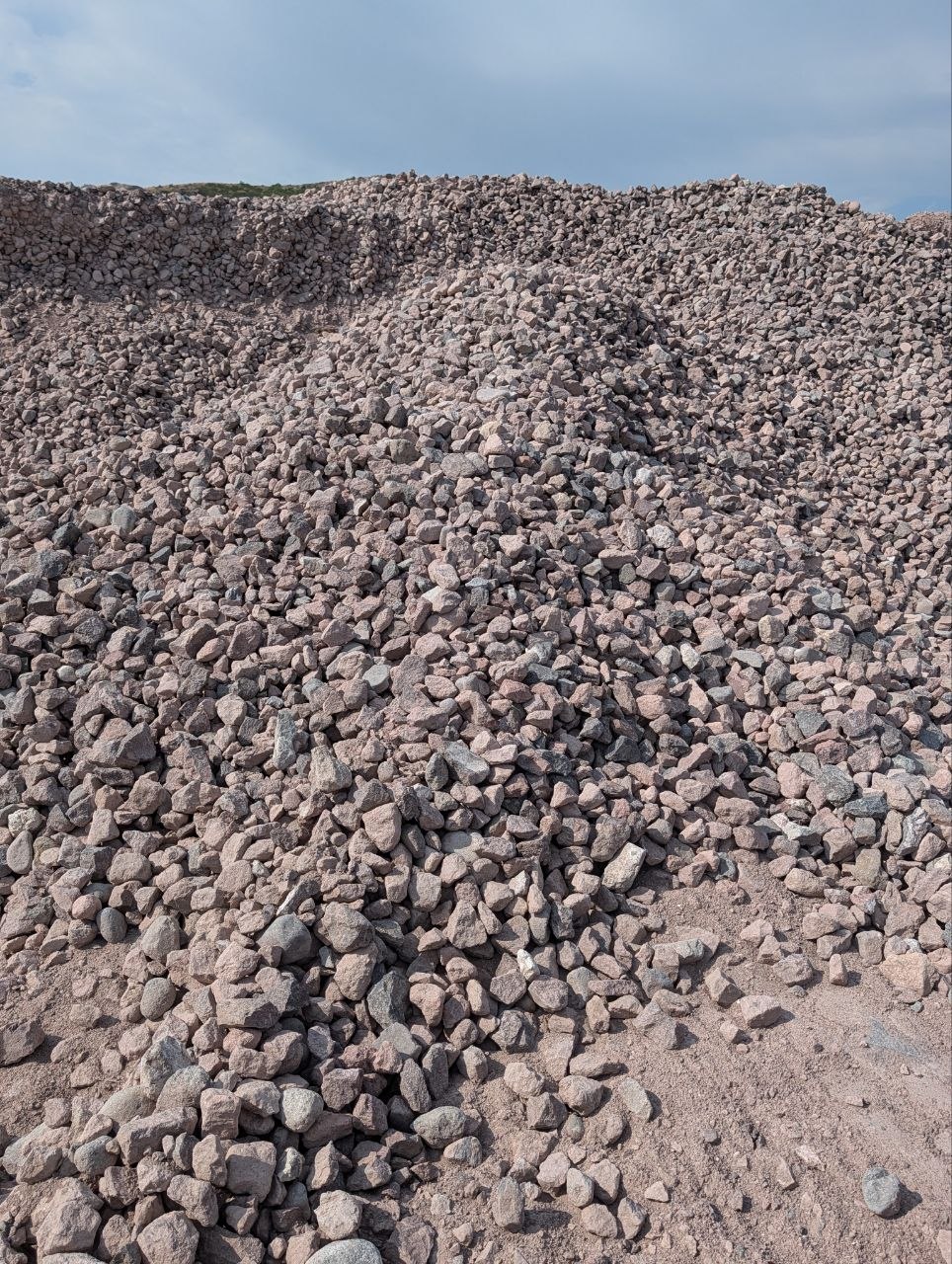
Large angular 4″ rock for armoring ground against moving water — channel banks, slope protection, culvert outlets, and drainage features across Utah.
Where it shines
- ✓Channel banks, ditch edges, and culvert inlets and outlets
- ✓Slope protection and erosion control
- ✓Drainage swales and utility-site armoring
- ✓Dry creek beds and hard landscape edges
Not the right choice for
- ✕Driveways, pads, and structural base (it will not compact)
- ✕Paver bedding, fine grading, or walking surfaces
- ✕Engineered bank protection without matching the plan's class and gradation
What is 4″ riprap?
Riprap is large angular rock — roughly 4 inches here — used to armor ground against moving water. It isn’t graded to compact and it isn’t meant to look tidy. The size and the broken faces are the whole point. Each piece is heavy enough to stay put and irregular enough to lock against its neighbors. The gaps between them let water pass through instead of lifting it.
If you’re placing rock to stop something from washing out, this is the family of material you’re in.
Where 4″ riprap works
Riprap goes on channel banks and ditch edges, slope faces that shed water, culvert inlets and outlets, drainage swales, and utility sites that need armor rather than surface. It also earns its place in heavy landscape work — dry creek beds and hard edges where smaller stone would migrate downhill in the first real storm.
One distinction matters here. On engineered, permitted, or public work, “riprap” is not a specification. The class, gradation, layer depth, and filter fabric all come off the plan, and rock undersized for the flow will simply move. Send us the plan note and we’ll match the load to it. On a private swale or a landscape edge, 4″ is a common and sensible call.
Where it’s the wrong choice
Don’t use riprap where you need a surface. It won’t compact, which rules it out under driveways, parking pads, sheds, and pavers — those start with 3/4″ road base and its fines. It’s too coarse for fine grading or anywhere you want to walk comfortably.
It’s also not interchangeable with 4×6 rock. The size ranges overlap, but they’re different products, so confirm which one the job actually calls for before you order a truckload of the wrong one.
Ordering tips
- Send the plan note if there is one. A class and gradation beat a photo every time.
- Give us area and depth, not tons. Large rock doesn’t estimate like base material — we’ll do the conversion.
- Plan the drop. Riprap gets placed, not raked. Decide where the truck sets it before delivery day.
- Tell us about access. Grades, soft ground, turnaround room, and overhead clearance all change which truck we send.
Coverage
Large rock does not estimate like base material. Send the coverage area, layer depth, and plan note if you have one, and we will convert it to tons and a trucking plan.
Material Calculator — 4″ Riprap
Estimate only — add 10–20% for compaction loss on structural material. Ask us for a firm quote before ordering.
Request a Quote for 3.5 Tons →Frequently Asked Questions
Is 4″ riprap the same as 4x6 rock?+
No. The size ranges overlap, but they are sold as different products and gradations vary by source. If your plans name one specifically, send the designation and we will match it.
Can I use 4″ riprap for erosion control?+
Yes — that is its main job. On engineered or permitted work, the class, gradation, layer depth, and filter fabric come off the plan, because rock that is undersized for the flow will move. On a private swale or landscape edge, 4″ is a common call.
Will riprap compact into a driveway base?+
No. It is too large and too open to lock up under a compactor. Driveways and pads start with 3/4″ road base, which has the fines needed to compact tight.
How much riprap do I need?+
Send the area and the intended layer depth rather than a tonnage guess. Large rock does not convert like base material, and depth on armoring work is usually driven by rock size.
Get a quote for 4″ Riprap
Tell us the material and the project — we'll get back to you fast with pricing and delivery.