Site Cleanup & Haul-Off in Utah County & Salt Lake County
Construction debris and dirt haul-off across Utah County and the Salt Lake Valley. Excavation spoils, old concrete, asphalt, and demo debris loaded out by the truckload — not a junk removal service, a trucking one.
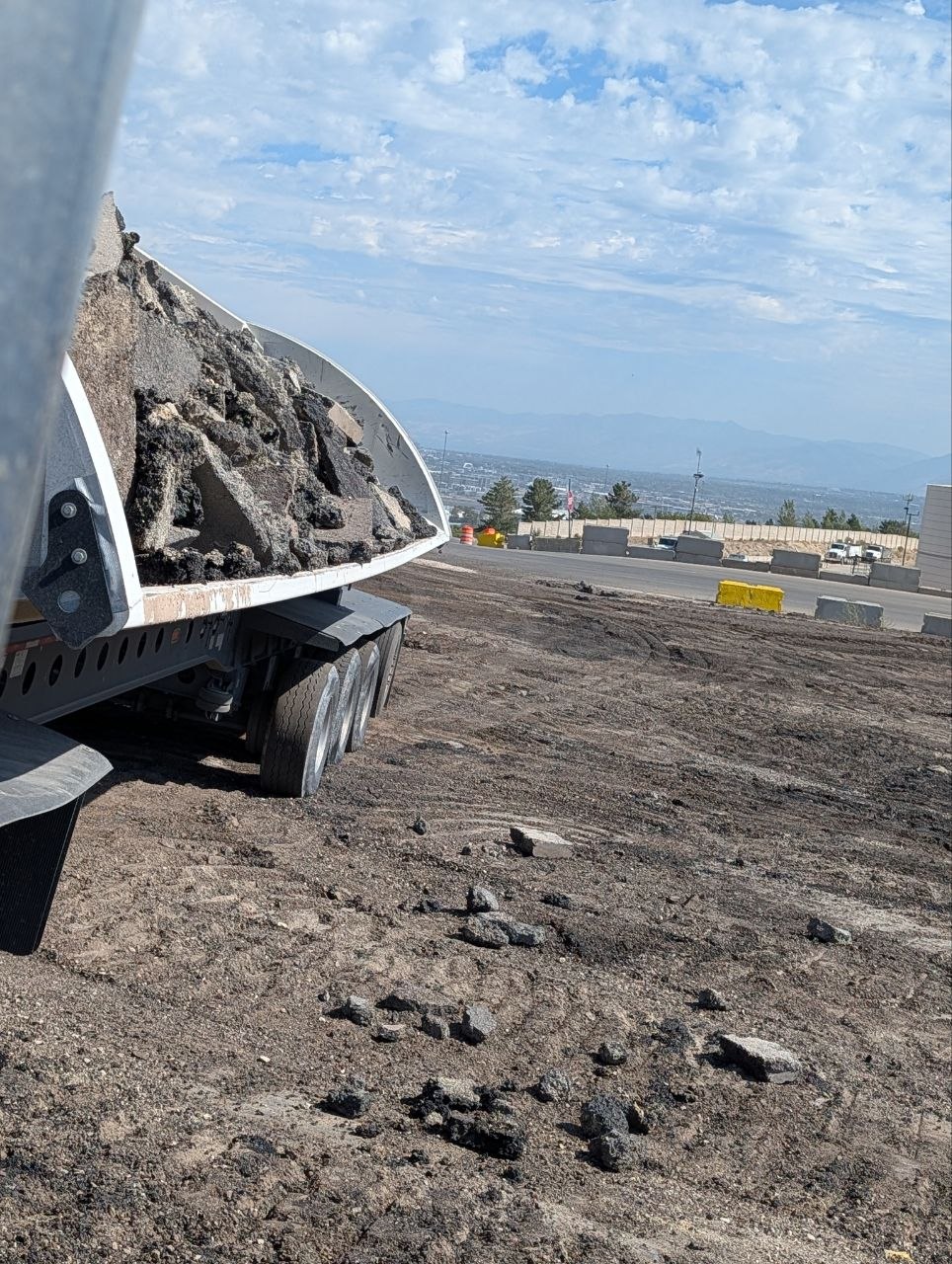
Getting material off your site, by the truckload
Half of every dirt job is subtraction. The driveway tear-out leaves a pile of broken concrete; the basement dig leaves a small mountain of spoils; the pool excavation produces more dirt than any back yard can absorb. We haul that material out of Utah County and Salt Lake Valley sites the same way we deliver it — 10–15 tons at a time in a 10-wheel dump truck, taken to the disposal, recycler, or fill site that costs the least for that particular material.
To be clear about what this is: a trucking service, not junk removal. If it came out of the ground or off a structure — dirt, rock, concrete, asphalt, clean demo debris — that’s us. Couches, appliances, garage cleanouts, green waste, and anything hazardous (paint, solvents, asbestos, fuel tanks) are not; a junk removal outfit or your city’s bulky waste program handles those better and cheaper than a dump truck ever will.
What we haul off
- Excavation spoils — basement digs, footings, pool excavations, utility trench spoil. A walk-out basement dig commonly generates 300–600 cubic yards; that’s a 40–70 load project, and we price it as one.
- Old concrete — demolished driveways, patios, footings, sidewalk sections. A 600 sq ft driveway at 4 inches thick is roughly 9–10 tons of rubble, basically one load.
- Asphalt tear-out — parking pads and driveways, hauled to recyclers who grind it back into base.
- Sod and stripping spoils — stripped lawn and topsoil from regrade projects.
- Clean demo debris — separated, machine-loadable construction debris from structural demo.
The word doing the work in that list is separated. A pile of clean concrete is cheap to dispose of because crushers want it. The same concrete mixed with rebar tangles, lumber, and trash bags becomes mixed C&D waste at several times the tipping rate. Five minutes of sorting with the excavator while you load saves real percentage points on the bill — we’ll tell you exactly how to stage the piles before we arrive.
Where it goes determines what you pay
Every load has three possible destinations, in ascending order of cost: a site that wants the material, a recycler, or the landfill. Clean dirt is the best case — when another project nearby needs fill, your “waste” becomes their material and everyone’s trucking bill drops. Concrete and asphalt go to crushers, who tip far below landfill rates because they resell the output as recycled base. Mixed debris goes to the landfill at the full rate. Part of what you’re paying us for is knowing, on the day you call, which doors are open for your specific material.
The bundle: full trucks both directions
If your project both takes delivery and generates spoils — and most do — never buy those as separate services. We deliver your road base or gravel, your machine loads spoils while the driver waits or on a scheduled return, and the truck leaves full. One truck, two billable directions, and the round trip costs meaningfully less than hiring delivery from one company and haul-off from another. On multi-day jobs we’ll sequence loads so the site never chokes on its own stockpile.
Homeowners, you’re included
This isn’t contractor-only. The DIY paver patio that produced a concrete pile, the regrade that left ten yards of clay on the lawn, the shed slab you broke up with a rented breaker — all normal one-or-two-load jobs. You’ll need a way to load the truck (a rented mini-excavator or skid steer turns a brutal weekend into an hour), and we need the usual access basics: about 10 feet of width and solid ground for a truck that grosses 25+ tons loaded.
Send photos of the pile to (385) 284-6232 by text and we’ll usually quote the load count straight from the pictures.
Frequently Asked Questions
How much does construction debris removal cost in Lehi and Utah County?+
Haul-off is priced per load or hourly, driven by tonnage, what the material is, and where it can legally go. A 10-wheel load moves 10–15 tons at a time, and clean, separated concrete or asphalt is the cheapest debris to get rid of because recyclers take it for far less than landfill rates. Call or text (385) 284-6232 with what you've got and we'll quote the load count.
What kind of debris do you haul off?+
Excavation spoils and dirt, broken concrete, torn-out asphalt, rock, and clean construction demo debris. We do not haul household junk, furniture, appliances, green waste, or anything hazardous — no paint, oil, asbestos, or tanks. If it came out of the ground or off a slab, it's probably our kind of load.
How do I get the debris into your truck?+
We're trucking, not a labor crew — the material needs to be loadable. On most jobs your excavator or skid steer loads us directly. No machine on site? Tell us when you call; we can often line up a loader operator or point you to a roll-off dumpster if hand-loading is the only option.
Is it cheaper to bundle material delivery with haul-off?+
Almost always. If we're delivering road base to your job anyway, the truck can leave loaded with your spoils instead of empty. You're paying for one truck's round trip instead of two one-way trips, and the savings is real money on multi-load projects.
Can my old concrete or dirt be recycled instead of dumped?+
Yes. Clean concrete and asphalt go to local crushers and come back to market as recycled base — tipping there costs well under landfill rates, and that difference flows into your price. Clean excess dirt can sometimes go to a site that needs fill instead of to disposal, which is the cheapest outcome of all.
Get a quote for site cleanup & haul-off
Tell us the material and the project — we'll get back to you fast with pricing and delivery.