A1A Engineered Fill
Spec engineered fill — confirm current pit gradation
Spec-oriented engineered fill for jobs that need stable, compactable import material instead of ordinary fill dirt. Used where load support, placement, and compaction matter.
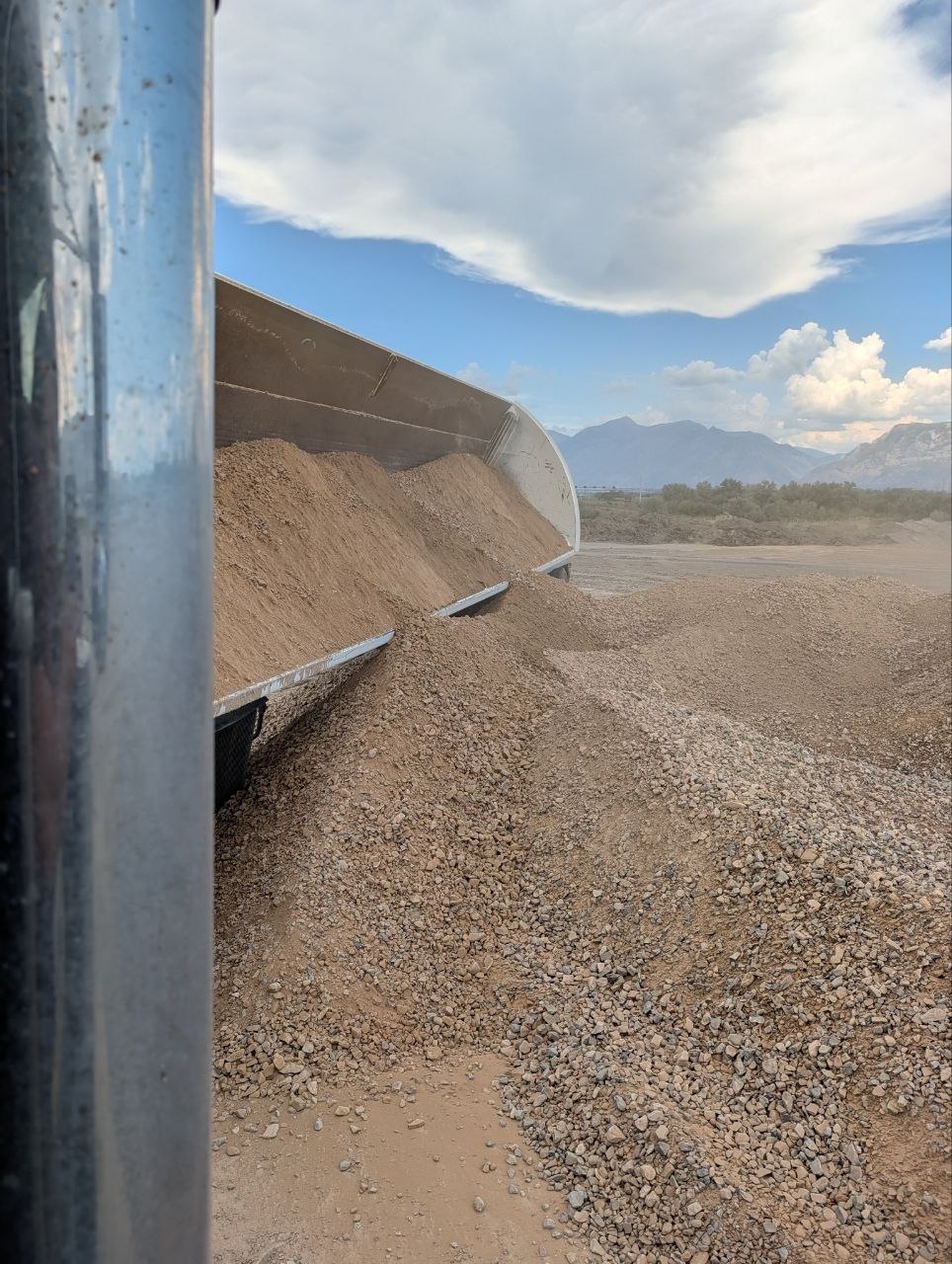
Where it shines
- ✓ Structural fill under slabs, pads, and flatwork when specified
- ✓ Engineered backfill for additions, garages, and site improvements
- ✓ Raising grade where ordinary fill dirt is not acceptable
- ✓ Contractor import material where compaction and consistency matter
- ✓ Base lifts below road base or other finish aggregate when the spec allows
Not the right choice for
- ✕ Decorative finish surfaces
- ✕ Garden or lawn growing layer
- ✕ Drainage layers that require clean rock with no fines
- ✕ Jobs where the engineer or city has specified a different material
What is A1A Engineered Fill?
A1A Engineered Fill is a compactable import material used when a job needs more than ordinary fill dirt. It is the kind of material contractors ask for when the finished area needs support, predictable placement, and compaction — not just cheap volume.
The key word is engineered. If a city, geotech, engineer, or project plan calls out a specific fill, the material has to match the spec. A1A from one approved source may be the right call for one job and the wrong call for another if the spec is different.
Where A1A works well
A1A Engineered Fill fits jobs where load support and consistency matter: building pads, garage or addition prep, backfill around site improvements, grade raises under future flatwork, and contractor import where ordinary dirt would settle or fail inspection.
It often works as a lower structural layer below a cap of road base, depending on what the plans require.
Where it is the wrong choice
Do not buy engineered fill just because it sounds better. If the job only needs bulk volume for a low area that will become lawn, ordinary fill dirt may be cheaper. If the job needs drainage, use clean rock. If the surface needs to look finished, use road base, hard pack, gravel, or another finish material.
And if there is an engineer or inspector involved, do not substitute material without approval. The expensive part is not the truckload — it is ripping it out after it fails compaction or inspection.
Ordering tips
- Send the spec if you have one. A photo of the plan note is enough to start.
- Tell us the job type. Slab, footing, wall, driveway, and landscape fill are not the same order.
- Plan for compaction. Engineered fill is placed in lifts, not just dumped in one deep pile.
- Ask about source. Pit source, moisture, and gradation matter when the material is being inspected.
Coverage
Use project plans, lift thickness, and compaction requirements to estimate A1A Engineered Fill. For rough planning, calculate cubic yards from the compacted volume and allow extra for compaction loss.
Material Calculator — A1A Engineered Fill
Estimate only — add 10–20% for compaction loss on structural material. Ask us for a firm quote before ordering.
Request a Quote for 3.7 Tons →Frequently Asked Questions
What is A1A Engineered Fill? +
A1A Engineered Fill is a spec-oriented compactable import material used where ordinary fill dirt is not good enough. The exact gradation and acceptance depends on the current pit source and the project requirements, so confirm the spec before ordering.
Is A1A the same as fill dirt? +
No. Fill dirt is cheap bulk subsoil for taking up space. A1A Engineered Fill is ordered when the job needs a more consistent, compactable material for support, backfill, or engineered placement.
Can I use A1A under concrete? +
Possibly, but only if it matches the project spec. Slabs, footings, and inspected work may require specific material, lift thickness, moisture, and compaction testing.
Does the pit source matter? +
Yes. A1A from any source should be checked against the job spec. Source, gradation, moisture, and availability can all affect whether it is the right material.
Get a quote for A1A Engineered Fill
Tell us the material and the project — we'll get back to you fast with pricing and delivery.