Filter Press Sand (FLSP)
Fine-to-medium compactable sand from filter press fines
Dense, compactable sand produced from aggregate washing fines and dewatered through a filter press. Often used as structural fill, bedding, and general import where uniform density matters more than drainage.
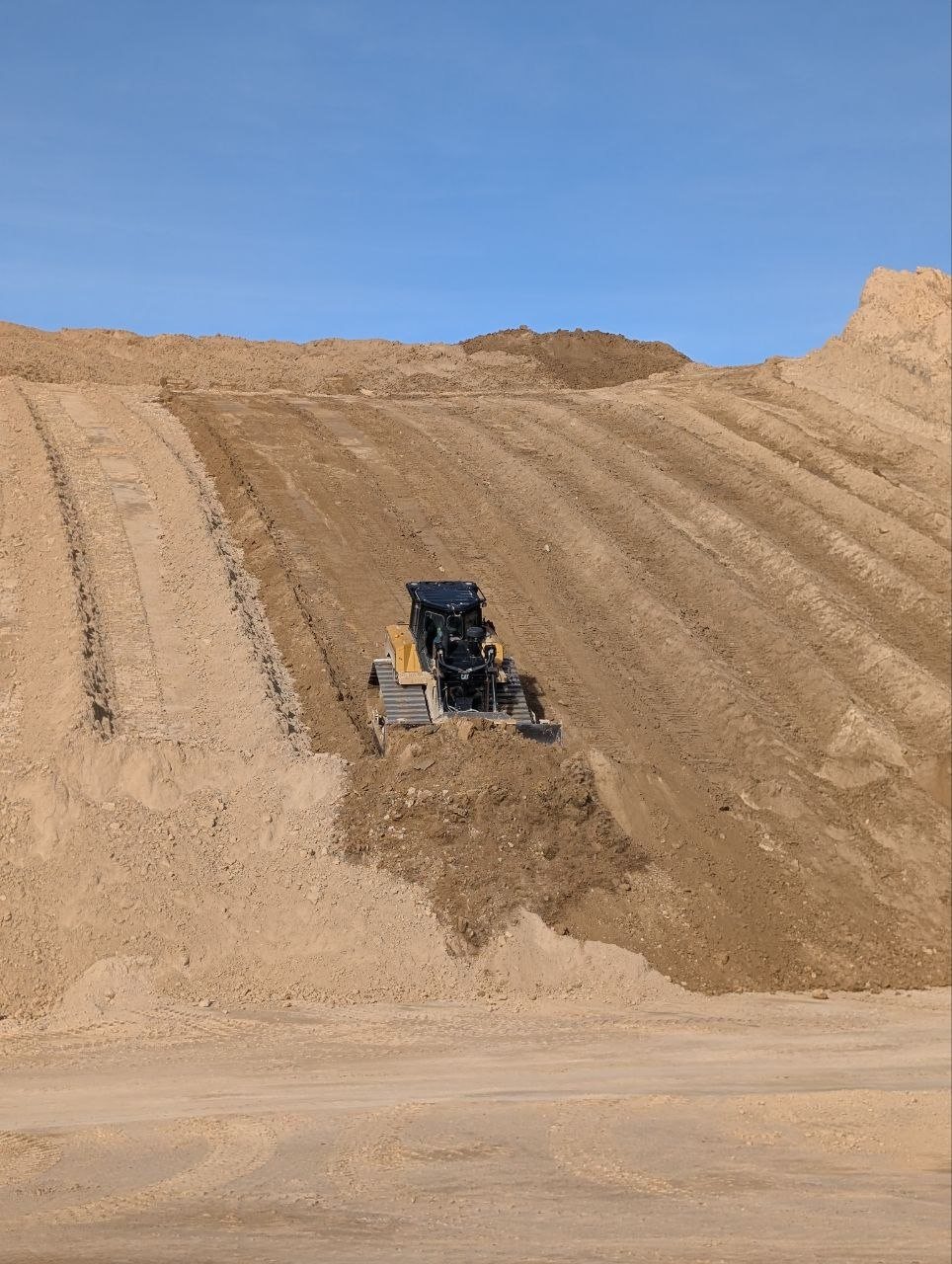
Where it shines
- ✓ Structural fill where uniform density matters
- ✓ Retaining wall and utility backfill when drainage is not the primary requirement
- ✓ Bedding and leveling fill under select site conditions
- ✓ General import where compactable sand is preferred over loose fill
- ✓ Fill behind flatwork, pads, and landscape structures when specified
Not the right choice for
- ✕ French drains or drainage layers
- ✕ Standard paver bedding when C-33 washed concrete sand is specified
- ✕ Mortar or concrete mixes unless approved by the mix design
- ✕ Finish surfaces where clean decorative material is expected
What is Filter Press Sand?
Filter Press Sand — often shortened to FLSP — is material produced during aggregate washing. Fine sand and slurry are run through a filter press to squeeze out water, leaving a dense, compactable sand/fines product.
It is not the same as washed concrete sand, mason sand, or cyclone sand. The name matters because each material behaves differently once it is placed and compacted.
Where FLSP works well
FLSP is useful when a job needs import material that can be placed, compacted, and shaped into a stable fill. It is commonly considered for structural fill, retaining wall backfill where drainage is handled separately, utility bedding under the right spec, and general site fill where consistent density matters.
Material source still matters. Filter Press Sand can behave differently from one approved source to another. Moisture, color, and gradation can change how it hauls, places, and compacts.
Where it is the wrong choice
Do not use FLSP as a clean drainage layer. It can hold moisture and includes fines, so it is not a substitute for clean drain rock in French drains, drainage swales, or other water-moving layers.
It is also not the automatic choice for paver bedding. If the spec calls for C-33 washed concrete sand, use washed concrete sand unless the contractor or engineer approves the substitution.
Ordering tips
- Tell us the application, not just the material name. Customers often mix up cyclone sand and FLSP.
- Ask about current pit source and moisture. Wet FLSP hauls and places differently than dry material.
- Plan for compaction. The finished volume depends on moisture, lift depth, and compaction method.
- Keep drainage separate. If the layer must drain, ask about clean rock instead.
Coverage
1 ton of filter press sand covers roughly 110–120 sq ft at 2 inches before compaction, depending on moisture and density.
Material Calculator — Filter Press Sand (FLSP)
Estimate only — add 10–20% for compaction loss on structural material. Ask us for a firm quote before ordering.
Request a Quote for 3.3 Tons →Frequently Asked Questions
What is filter press sand? +
Filter press sand, often shortened to FLSP, is sand/fines material that has been dewatered through a filter press during aggregate washing. It is usually denser and more compactable than loose fill sand.
Is FLSP the same as cyclone sand? +
No. Cyclone sand and filter press sand come from different parts of the washing process and behave differently. Cyclone sand is typically better for drainage; FLSP is usually better where compaction and uniform density matter.
Can I use filter press sand for pavers? +
Not as the default choice. Standard paver bedding usually calls for washed concrete sand. FLSP can work in some fill or leveling applications, but check the project spec before substituting it.
Does the pit source matter? +
Yes. Moisture, color, gradation, and handling can vary by source. If the job is sensitive to finish, compaction, or drainage, ask where the material is coming from before ordering.
Get a quote for Filter Press Sand (FLSP)
Tell us the material and the project — we'll get back to you fast with pricing and delivery.