Crusher Fines / Hard Pack
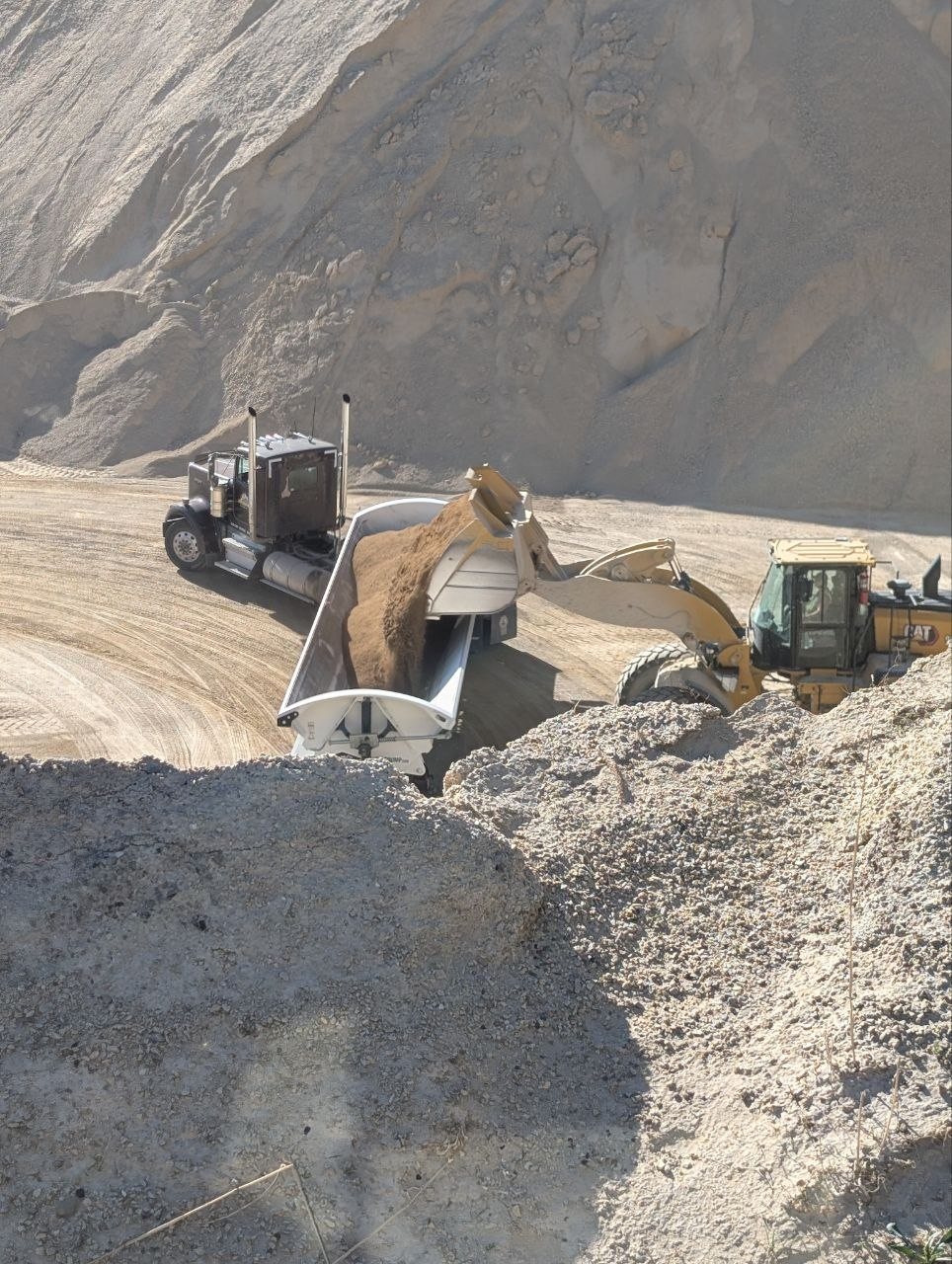
Fine crushed aggregate with compactable fines
Fine crushed aggregate with enough dust and small rock to compact into a firm, hard surface. Commonly used for pathways, equipment yards, compacted pads, and low-speed driving surfaces where drainage is not the main goal.
Where it shines
- ✓ Compacted pathways and walking trails
- ✓ Equipment yards and staging areas
- ✓ Shed, bin, and small pad surfaces
- ✓ Low-speed driveway topping where a firm surface matters more than clean decorative rock
- ✓ Filling and smoothing over compacted road base
Not the right choice for
- ✕ French drains or drainage layers
- ✕ Decorative clean-rock surfaces
- ✕ Muddy subgrades without a structural base below
- ✕ Steep slopes where fines can wash out
What are crusher fines?
Crusher fines are the small particles produced when rock is crushed and screened. Instead of being clean washed rock, the material includes fine dust and small aggregate. That mix is what lets it compact into a firm surface.
Around Utah, customers may call this material crusher fines, hard pack, hardpack, or compacting fines. The exact product varies by source, so source conditions matter when color, texture, or gradation matters.
Where hard pack works well
Hard pack is useful when you want a surface that locks together tighter than loose gravel but does not need to drain like clean rock. It is common for walking paths, side yards, staging areas, equipment access, small pads, and low-speed driving surfaces.
It can also be used as a smoothing layer over properly compacted road base. The road base carries the structure; the fines help tighten the surface.
Where crusher fines are the wrong choice
Do not use crusher fines where water needs to move through the material. The same fines that make it compact also clog drainage. If the job is a French drain, drainage swale, or clean bedding layer, ask for clean drain rock or washed material instead.
Crusher fines also need a prepared base. Dumping hard pack over mud is just expensive mud frosting. A good surface starts with grade, drainage, and compaction.
Ordering tips
- Ask for the source if appearance matters. Color and texture vary by pit.
- Plan for compaction. The delivered pile is loose; the finished surface will tighten and settle.
- Control water. Fines can wash out on slopes or where runoff concentrates.
- Send site photos. Access, slope, and dump location affect what truck configuration makes sense.
Coverage
1 ton of crusher fines covers roughly 110 sq ft at 2 inches before compaction. For a firmer hard-pack surface, plan on 2–4 inches over a prepared and compacted base.
Material Calculator — Crusher Fines / Hard Pack
Estimate only — add 10–20% for compaction loss on structural material. Ask us for a firm quote before ordering.
Request a Quote for 3.6 Tons →Frequently Asked Questions
Are crusher fines the same as hard pack? +
Around Utah, people often use "crusher fines" and "hard pack" for similar compactable fine crushed materials. The exact gradation and color vary by pit, so if the finish surface matters, ask what source and product is being quoted.
Can crusher fines be used for a driveway? +
For a low-speed driveway topping or yard surface, yes, when placed over a solid compacted base. For a primary driveway carrying heavy trucks, use road base below it and expect maintenance because fines can rut or wash if water is not controlled.
Do crusher fines drain well? +
No. Crusher fines compact because they include dust and small particles. That is useful for firmness, but bad for drainage. For French drains or drainage layers, use clean drain rock instead.
Do crusher fines need to be compacted? +
Yes. Place them in thin lifts, moisture-condition if needed, and compact with a plate compactor or roller. Loose fines will track, rut, and blow around until they are compacted.
Get a quote for Crusher Fines / Hard Pack
Tell us the material and the project — we'll get back to you fast with pricing and delivery.